The Great Energy Divide: 2025 Power Outages and Resilience Report
February 27, 2025
Power outages are no longer isolated incidents—they are recurring stress tests on national infrastructure, economic stability, and emergency preparedness. From widespread blackouts in developing economies to targeted grid failures in advanced nations, each incident highlights how critical power generation, backup systems, and energy diplomacy are in sustaining daily life.
This article compares the most energy-resilient OECD nations with those struggling to maintain power continuity. It explores the intersection of national planning, infrastructure investment, and political foresight that determines whether a country thrives or collapses during an energy failure.
Top-performing OECD countries have embraced diversified power generation strategies, fortified power backup systems, and embraced energy interdependence through trade. These nations prove that proactive planning pays off when faced with climate shocks or geopolitical disruptions.
| Country | Primary Energy Sources | Grid Reliability | Backup Systems | Export Capacity |
|---|---|---|---|---|
| Norway | 95% Hydro, 5% other renewables | 99.9% | 1,600+ hydro plants, smart grid | Major EU exporter |
| Iceland | 85% Geothermal/Hydro, 15% other | 99.8% | Geothermal + diesel systems | Energy surplus |
| France | 70% Nuclear, 20% Renewables | 99.7% | 56 nuclear reactors, smart grid | Largest EU electricity exporter |
| Denmark | 60% Wind, 25% Biomass, 15% other | 99.6% | Advanced wind + battery storage | Strong Nordic power trader |
| Switzerland | 60% Hydro, 35% Nuclear, 5% other | 99.7% | Pumped storage, alpine grid | Regional trading hub |
These countries invest in long-term reliability. Norway’s surplus hydroelectric power is exported across Europe. Iceland’s use of geothermal energy makes it a low-cost hub for power-intensive industries. France’s nuclear dominance ensures base load stability, while Denmark leads in wind-based smart grids. Switzerland combines hydro and nuclear with high-capacity reservoirs and alpine trading systems.
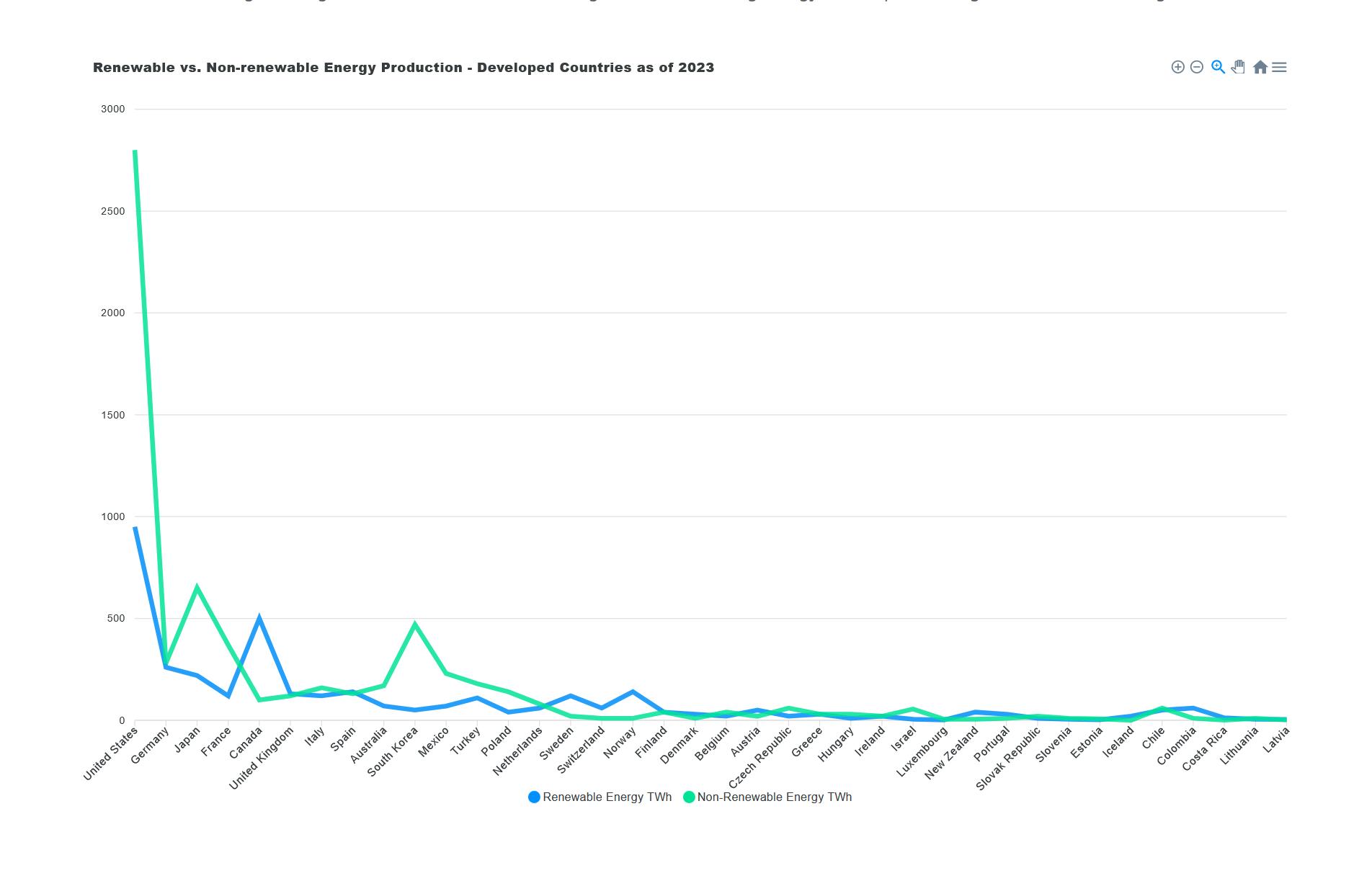
Several OECD and candidate countries experience power outages regularly due to insufficient infrastructure and outdated backup systems. This vulnerability impacts national economies and erodes public trust.
| Country | Primary Sources | Grid Reliability | Backup Systems | Key Vulnerabilities | Recent Outages |
|---|---|---|---|---|---|
| Greece | 35% Gas, 30% Lignite, 35% Renewables | 95.2% | Limited diesel backup | Aging coal plants, poor grid storage | 2021 Athens blackout |
| Turkiye | 40% Gas, 35% Coal, 25% Hydro/Other | 96.8% | Minimal storage | Import dependency, instability | 2015 nationwide outage |
| Chile | 45% Coal, 35% Hydro, 20% Other | 97.1% | Limited thermal backup | Seismic risk, geographic isolation | 2019 Santiago blackout |
| Mexico | 60% Gas, 15% Oil, 25% Other | 95.8% | Limited reserves | Old infrastructure, winter sensitivity | 2020-21 energy crisis |
| Colombia | 70% Hydro, 25% Thermal, 5% Other | 94.3% | Limited thermal plants | Drought sensitivity, weak national backup | 2016 El Niño shortages |
| Texas, USA | 47% Gas, 20% Wind, 20% Coal, 10% Nuclear | Varies (not nationally integrated) | Minimal winterization | Isolated grid, deregulated market | 2021 Winter Storm blackout |
| Country | Primary Sources | Grid Reliability | Backup Systems | Key Vulnerabilities | Recent Outages |
|---|---|---|---|---|---|
| Greece | 35% Gas, 30% Lignite, 35% Renewables | 95.2% | Limited diesel backup | Aging coal plants, poor grid storage | 2021 Athens blackout |
| Turkiye | 40% Gas, 35% Coal, 25% Hydro/Other | 96.8% | Minimal storage | Import dependency, instability | 2015 nationwide outage |
| Chile | 45% Coal, 35% Hydro, 20% Other | 97.1% | Limited thermal backup | Seismic risk, geographic isolation | 2019 Santiago blackout |
| Mexico | 60% Gas, 15% Oil, 25% Other | 95.8% | Limited reserves | Old infrastructure, winter sensitivity | 2020-21 energy crisis |
| Colombia | 70% Hydro, 25% Thermal, 5% Other | 94.3% | Limited thermal plants | Drought sensitivity, weak national backup | 2016 El Niño shortages |
| Texas, USA | 50% Gas, 29% Wind, 16% Coal, 10% Nuclear, 6% Solar | 99.9% (ERCOT managed) | Texas Energy Fund backup, limited winterization | Isolated grid, deregulated market | 2021 Winter Storm Uri (4.5M affected), 2024 summer peak alerts |
For instance, Turkiye‘s 2015 blackout stemmed from a grid collapse exacerbated by regional instability. Colombia faces frequent droughts but lacks robust thermal alternatives. These nations are rich in potential—solar, wind, hydro—but lack long-term investment in energy resilience.
When power outages occur without proper power backup, the results are catastrophic:
These cases underscore how inadequate planning leads to cross-sectoral collapse—affecting healthcare, food supply, banking, and water access.
Prepared nations combine multiple tactics:
These investments strengthen the grid and elevate international standing. In contrast, unprepared countries face slow disaster recovery, heightened energy costs, and political instability.
External Source: IEA Energy Security Overview 2023
Energy isn’t just domestic—it’s political. Countries with surplus electricity (France, Norway) wield influence via cross-border energy deals. Countries like Greece, Mexico, and Turkiye, reliant on imports, often compromise policy flexibility to maintain supply.
This makes energy diplomacy a strategic tool, transforming electricity from a utility into geopolitical leverage.
Consistent infrastructure investment delivers:
Delaying modernization increases the frequency and severity of power outages, making economic progress unsustainable.
According to the World Energy Council, countries ranking high in the Energy Trilemma Index share three traits: strong regulation, high investment, and deep international cooperation.
The disparity in power infrastructure among OECD and candidate nations offers vital lessons on the value of strategic planning, investment, and backup systems. Nations that commit to modernization and regional cooperation secure stronger economic futures, while those that do not risk falling behind in a power-dependent global economy.
Energy security is no longer a luxury — it’s a necessity for stability and economic continuity. The top-performing OECD countries have invested in redundancy, diversity, and regional integration. Others must shift from reactive policies to proactive infrastructure planning, especially as climate change and geopolitical instability escalate.